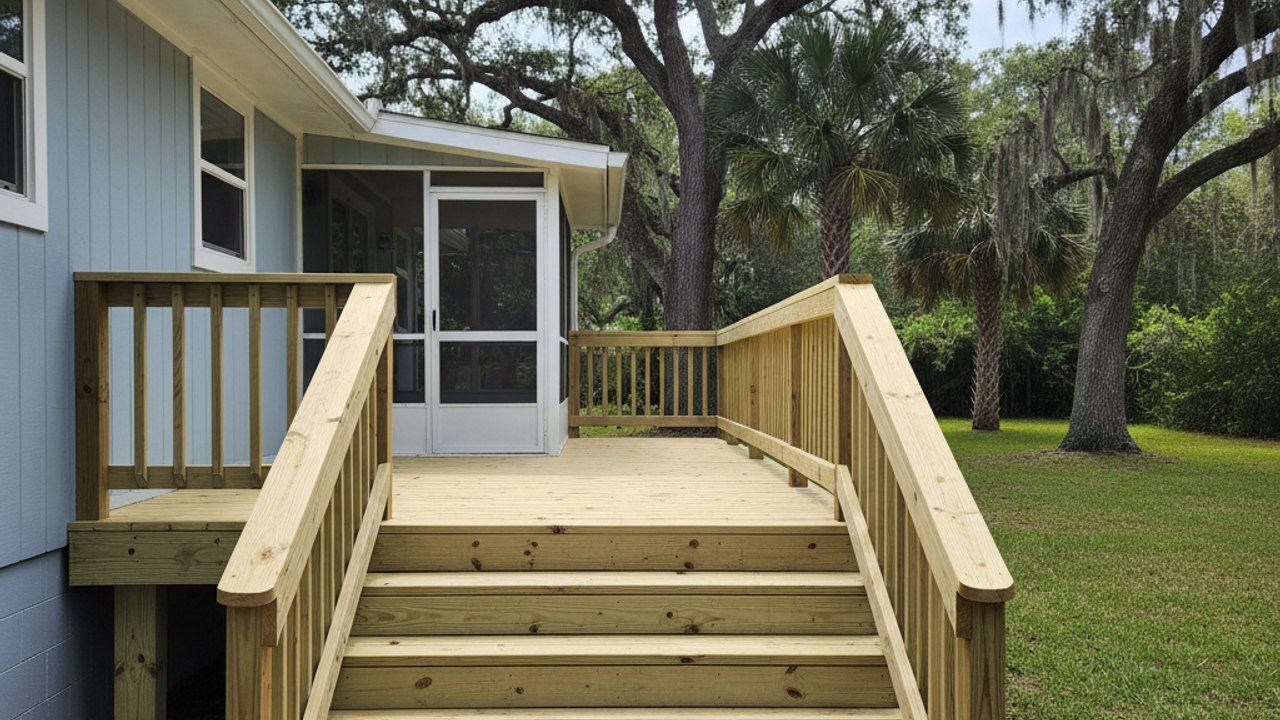
People ask this expecting a one-word answer, and there is one: winter through early spring is the easiest stretch to build a deck in Sarasota. But that's the short version. The real answer has more to do with what our rain, heat and storm season actually do to lumber, concrete and coatings, not just whether it's comfortable to stand outside.
Sarasota runs on two seasons, not four. Roughly November through April is dry, with lower humidity and highs mostly in the 70s. June through September is wet, with afternoon thunderstorms that can drop two or three inches in under an hour, most days, like clockwork. That split affects almost every step of building a deck, not just the day the crew shows up.
Why the rainy season slows the work down
Footings are the first place summer rain causes real delays. Sarasota's soil is mostly sand, which drains fast and doesn't hold water the way clay does further inland, so a footing hole isn't ruined by an afternoon storm. But you still can't pour concrete into standing water, and if the forecast has a storm rolling through by 3pm every day, a crew loses hours waiting it out or has to reschedule the pour entirely.
Staining and sealing is worse. Pressure-treated pine needs to dry out before it will take a sealer, and in Florida that can take 60 to 90 days after installation depending on humidity, not the 2 to 3 weeks you'd see in a drier climate. Once it's ready, the coating itself needs a dry window, usually at least 24 to 48 hours with no rain before and after application. In July or August, finding two dry days in a row back to back isn't guaranteed. That's why a lot of stain and seal work in this area gets scheduled for the dry season even on decks that were built months earlier.
Hurricane season changes the calculation, not just the calendar
Hurricane season here runs June 1 through November 30, with the highest odds of a named storm in our area falling in August, September and October. It matters for deck work for a practical reason: you don't want a project sitting half-finished when a storm comes through. An open post hole with rebar standing in it, a ledger board bolted to the house but not yet flashed, a rail post set but not braced, all of that is exposed to wind and driving rain it wasn't built to handle yet.
The ledger board is the part that worries me most. That's the framing member bolted to the house that carries a big share of the deck's load, and it has to be flashed properly where it meets the siding or it becomes a slow leak point that rots the house framing behind it, not just the deck. That's not a hurricane-season problem specifically, it's a year-round one, but leaving that step exposed and unsealed through weeks of daily summer downpours makes a bad detail worse faster.
What the ground and the heat do to a deck all year, not just on build day
Sandy soil is actually a decent thing to build on here. It doesn't heave the way expansive clay does up north, so footings tend to stay put once they're set at proper depth, usually a minimum of 12 inches for a standard residential deck, more for larger structures or pool decks. What sand doesn't do is grip a shallow post as firmly as denser soil, so footing depth and diameter aren't a place to cut corners just because the ground is easy to dig.
Termites don't take a season off in Florida. Subterranean termites are active here year round, which is one reason ground clearance and treated lumber matter regardless of when you build. Composite decking has its own heat issue: the boards expand more than wood does in our summer temperatures, so gapping between boards needs to account for that, usually around 3/16 inch, or a deck installed tight in a cool January will start buckling by August.
Mildew and algae are a year-round nuisance too, worse under tree canopy. Decks in older, shadier neighborhoods like Southgate or under the oaks near Siesta Key tend to need pressure washing more often than a deck out in full sun in a newer subdivision. That's not seasonal work exactly, but summer humidity speeds up growth, so a deck that looked clean in March can look green by July.
Permits, inspections, and building in your lead time
Most attached decks and any deck over a certain size need a permit, issued either through Sarasota County or the City of Sarasota depending on where the lot sits. Inspectors typically check footing depth before the concrete goes in, the ledger board attachment, and railing details like height and baluster spacing, which by code needs to keep a 4-inch sphere from passing through. If you're in a flood zone near the water, there can be additional review.
Permit review isn't instant, often a few weeks depending on the office's workload. If your property is in a community with an HOA, and plenty of developments around Lakewood Ranch and Palmer Ranch have one, you may need architectural approval before the county permit even gets submitted. Add that lead time up and it's worth starting the paperwork in late summer or early fall if you want the actual build to land in the dry season.
The practical calendar
November through April is the sweet spot for new builds, footings, framing and any coating work. Lower humidity means lumber dries faster and stain cures the way it's supposed to. May and early June can still work if you're watching the forecast closely. October is often good once the worst of hurricane season activity has passed, though it's worth keeping an eye on the tropics through the end of November.
Repairs, board replacement and pressure washing aren't as weather-locked, since there's no long cure or dry-out period involved, so those can happen close to any time of year if something's failing and needs attention now. New construction and staining are the two where timing actually changes the outcome.
If you're planning a build, a repair, or just want an honest read on what season makes sense for your project, that's the kind of thing worth talking through before you set a start date. You can see the range of work we do at All Things Deck Solutions.