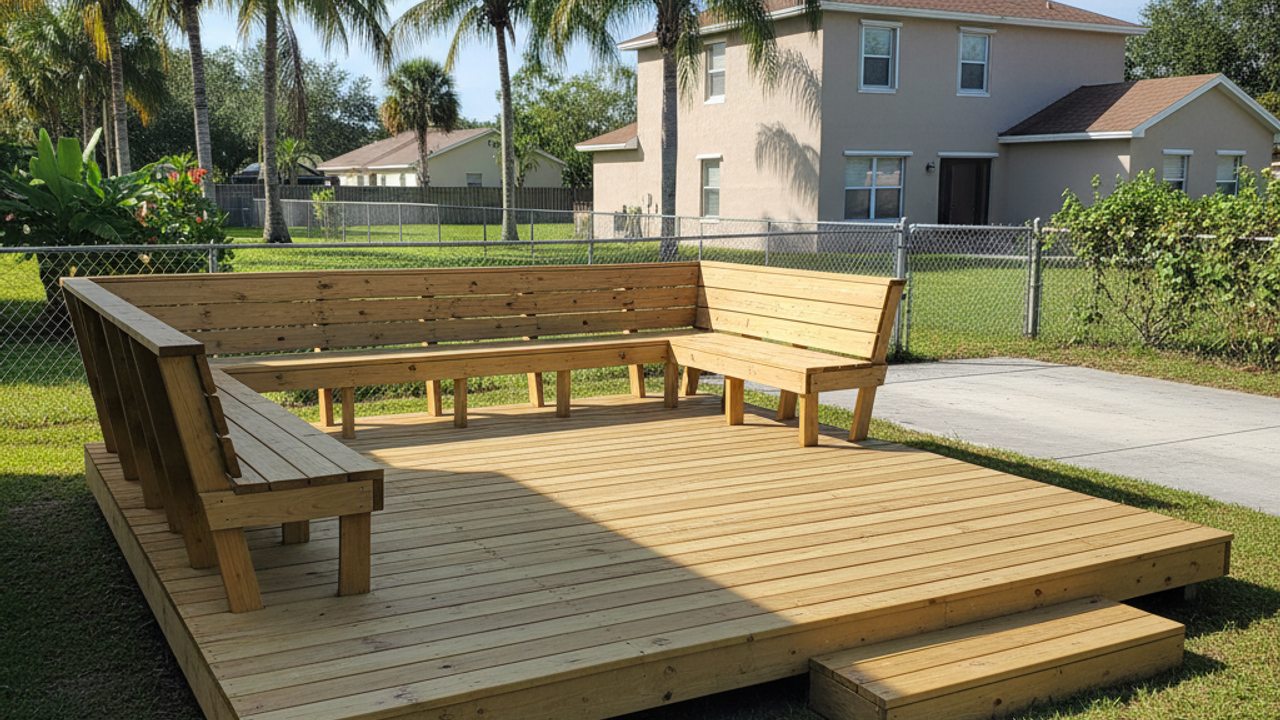
A deck built wrong in Sarasota doesn't take long to tell on itself. The sun bakes cheap composite gray and brittle in two summers. Salt air off the bay eats through the wrong screws in less time than that. A footing poured too shallow moves the first time the water table comes up after a wet September. Picking a builder here isn't just about who gives you the nicest rendering. It's about who understands what this ground and this climate do to lumber, concrete, and fasteners.
Ask to see the permit before you ask about price
Any deck attached to your house, or built more than about 30 inches off the ground, needs a permit in Sarasota County or the City of Sarasota, depending on where your lot sits. A builder who tells you "we don't usually bother with that one" is telling you he's willing to cut a corner on the part of the job that gets inspected. Permitted work gets a footing inspection before the concrete goes in, a framing inspection before the boards go down, and a final. That's three separate points where a mistake gets caught before it's buried under decking. Skip the permit and none of that happens. You find out about the mistake yourself, usually after a board sags or a railing wobbles.
Older streets in neighborhoods like Laurel Park or Gillespie Park sometimes have surveys that don't match what's actually in the ground anymore. A builder who's done work in the older parts of the city will check your setback and easement lines before he starts digging, not after the county calls him.
What Sarasota's sand, water table, and bugs do to a deck
Sarasota sand drains fast, which sounds like a good thing, and mostly is. It also means footings need real depth and real bearing, not a bag of quick-set poured into a shallow hole. Twelve inches below grade is a common minimum for a residential deck footing here, but the actual number depends on your soil report and what the local code office wants to see, and a builder should be able to explain why he's going deeper or not. Closer to the water, on Siesta Key, Bird Key, or along the canals, the water table sits high enough that footings can hit water before they hit the depth you'd expect on drier ground. That changes how the concrete gets placed.
Florida has subterranean termites working the soil almost everywhere, and a ledger board or a post base that isn't pressure-treated or properly separated from ground contact is an invitation. Ask what treatment rating the lumber carries, and ask how the ledger gets flashed against the house. Water getting behind an unflashed ledger is one of the most common reasons a deck fails at the one point where it's actually load-bearing.
Hurricane season and the hardware nobody sees
June through November is hurricane season here, and even in a year with no direct hit, wind load matters for anything built outdoors. Joist hangers and post connectors should be hot-dip galvanized or stainless, not the cheaper electro-galvanized fasteners that look fine in the box and start rusting within a year or two of salt air and afternoon humidity. This matters more the closer you are to the water, but Sarasota's humidity is hard on standard hardware even a few miles inland.
Composite decking has the same split. Capped composite holds up to UV and humidity for decades. Uncapped or bargain composite fades, chalks, and can swell at the edges within a few Florida summers. If a quote doesn't specify a brand and product line for the decking and just says "composite," ask which one and look it up yourself.
Concrete curing is its own local wrinkle. Florida heat sets the surface of a footing or a slab fast, which can trick people into thinking it's ready sooner than it is. A footing needs a few days of real strength gain before it's carrying post loads, and a poured pool deck slab generally wants at least three to four days before foot traffic and closer to a week before anything heavy sits on it, even though the surface looks dry in an afternoon.
The contract tells you more than the sales pitch does
A legitimate deck builder in Florida carries a state contractor license, general liability insurance, and workers' comp coverage, and should hand over that information without you having to ask twice. The contract should list the actual materials by name and grade, not just "decking" and "railing." It should spell out a deposit, usually a percentage rather than the full amount up front, tied to material delivery or the start of work. A written payment schedule tied to inspection milestones is a good sign. A demand for the full balance before the permit is even pulled is not.
Get more than one quote. Not because the cheapest is automatically wrong, but because a quote that's dramatically lower than the others is usually missing something: proper footings, code-rated hardware, a permit fee, or the labor to flash the ledger correctly. You'll pay for that missing piece eventually, just later and with less leverage.
Signs to walk away from
- No license number offered, or one that doesn't check out with the state.
- Cash only, or a big discount for paying the whole job up front.
- No mention of a permit, or a claim that your project is "too small" to need one.
- A quote with no product names, just categories like "wood decking" or "railing system."
- Pressure to sign today for a price that goes away tomorrow.
- No answer, or a vague one, when you ask how the footings are sized for your soil.
None of this is complicated once you know to ask. A deck here has to deal with sand that drains but shifts, a water table that isn't always deep, salt air that goes after cheap metal, and a wind season that lasts half the year. A builder who talks about those things without you prompting him has probably poured a lot of footings in this county already. If you want to see how we handle the permitting, the footings, and the hardware on our own jobs, take a look at our deck builder work around Sarasota.